
How It Works
Safety First
Every seismic retrofit is only as strong as its hardware. Here's a look at the engineered components we install — and exactly how they keep your home anchored during an earthquake.
The Foundation of Safety
Why Hardware Matters
During an earthquake, lateral forces push and pull your home's frame away from its foundation. The right hardware — properly installed — transfers those forces safely into the ground instead of letting your house slide, tip, or collapse. We use only code-approved Simpson Strong-Tie and equivalent hardware on every job.

The Risk
What Happens Without Retrofitting
Most pre-1980 California homes sit on a short wood-framed wall called a cripple wall. Without bracing, this wall can rack and collapse sideways in seconds — dropping the entire house off its foundation. Foundation bolting and cripple wall bracing work together to prevent both failure modes.
Cripple wall racking
Unbraced short stud walls between the foundation and first floor can shear and collapse under lateral seismic loads.
Foundation sliding
Without anchor bolts, the wood sill plate can slide off the concrete foundation, separating the house from the ground entirely.
Connection failure
Inadequate fasteners between framing members allow the structure to pull apart at joints before the wood itself fails.
System Diagram
How It All Connects
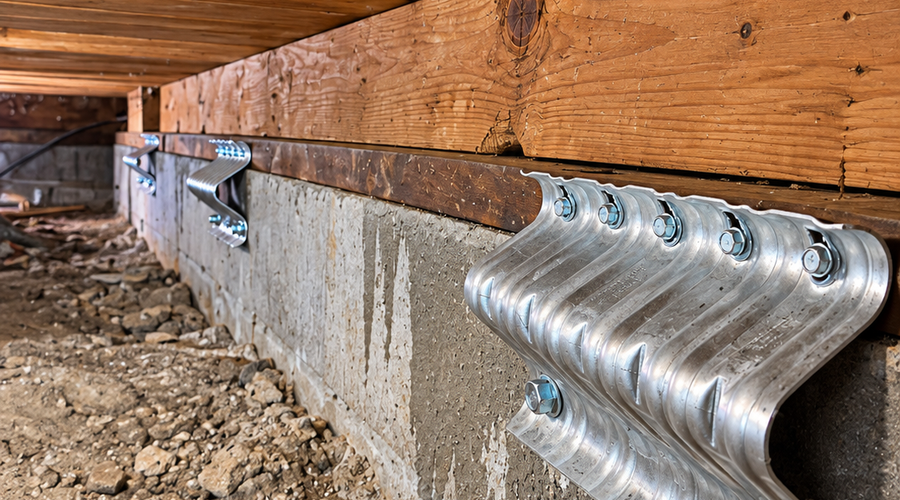
Every component works as a system. The L-90 clips tie the cripple wall to the mudsill; the URFP anchor bolts tie the mudsill to the concrete. SDS screws lock every metal-to-wood connection. Together they create a continuous load path from your floor framing down to the ground.
The Hardware
What We Install & Why
Simpson L90
L-90 Angle Clips
Cripple wall to mudsill connection
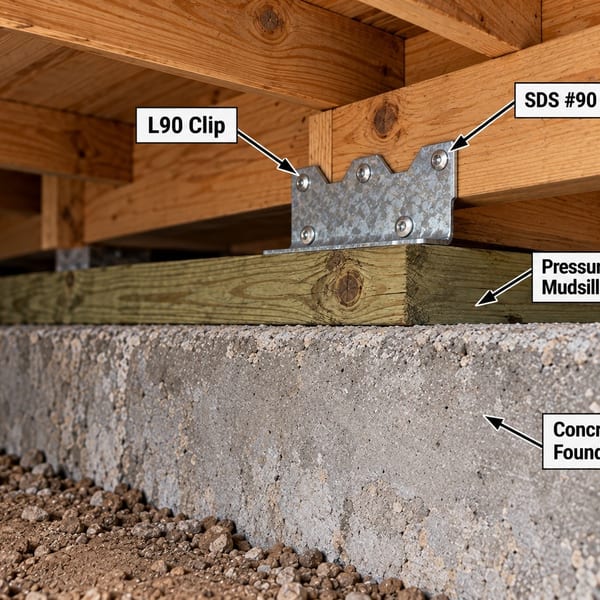
The L-90 is a galvanized steel angle clip that ties the cripple wall studs directly to the mudsill (the bottom horizontal plate resting on the foundation). Installed at every stud bay, these clips prevent the wall from lifting or separating from the sill during vertical and lateral shaking.
How it works
One leg fastens to the face of the stud with SDS screws; the other leg fastens to the mudsill. The 90° bend transfers both uplift and shear forces across the connection — forces that would otherwise split the joint apart.
URFP + ½" Titen AB
URFP Anchors with ½" Titen Anchor Bolts
Mudsill to concrete foundation connection
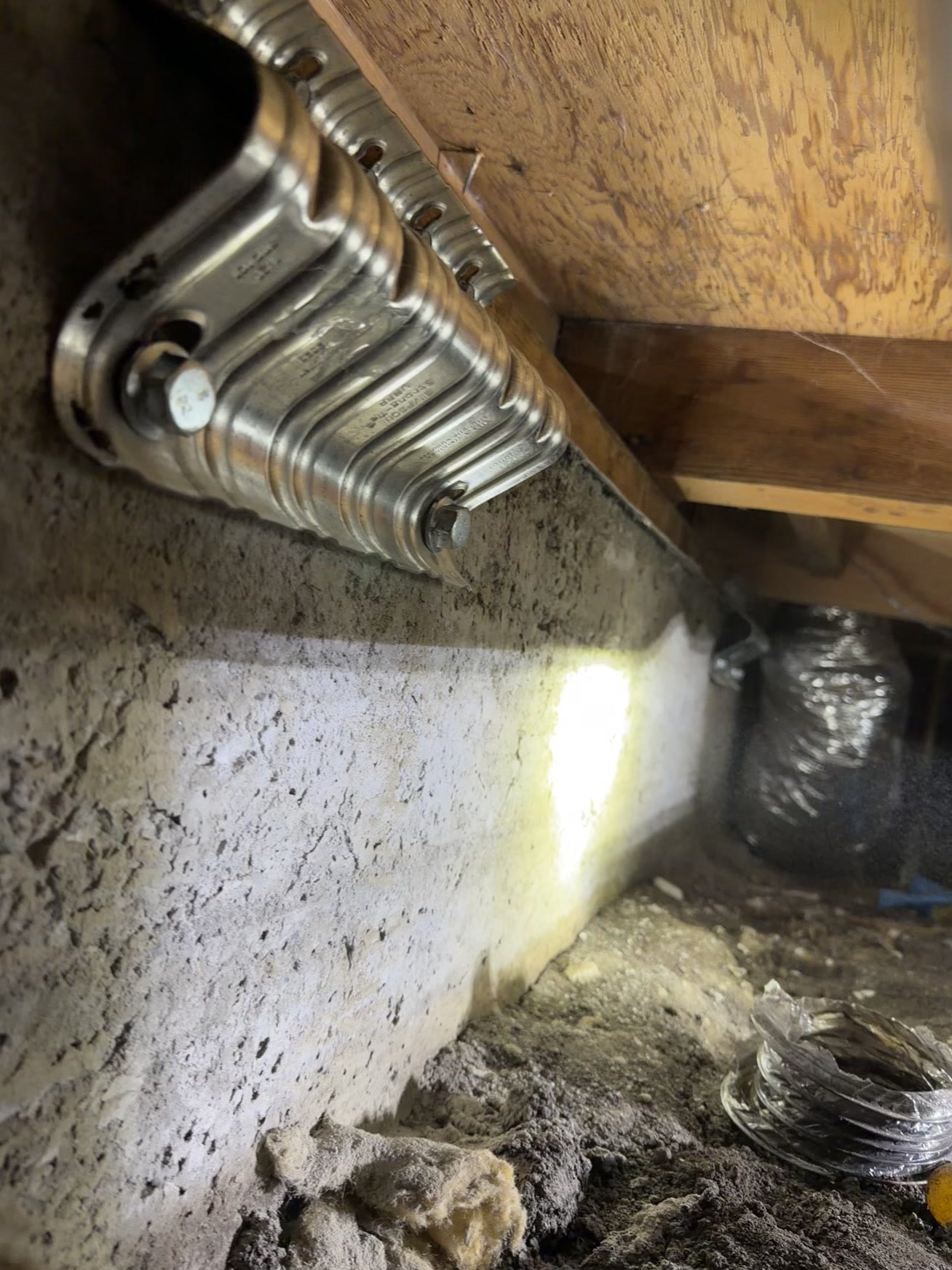
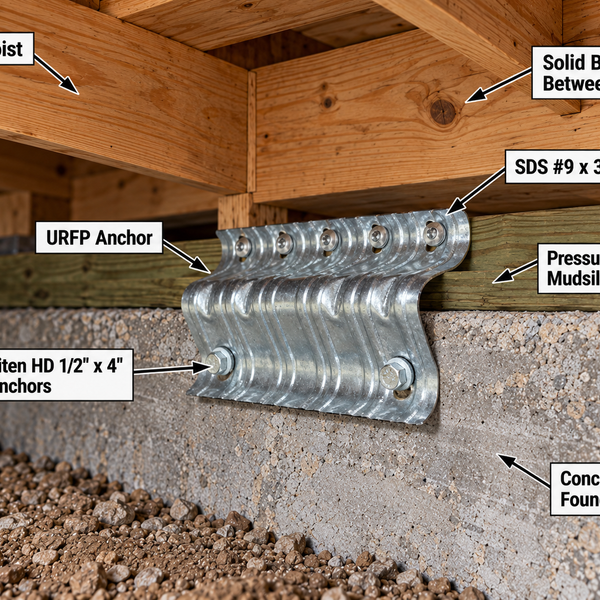
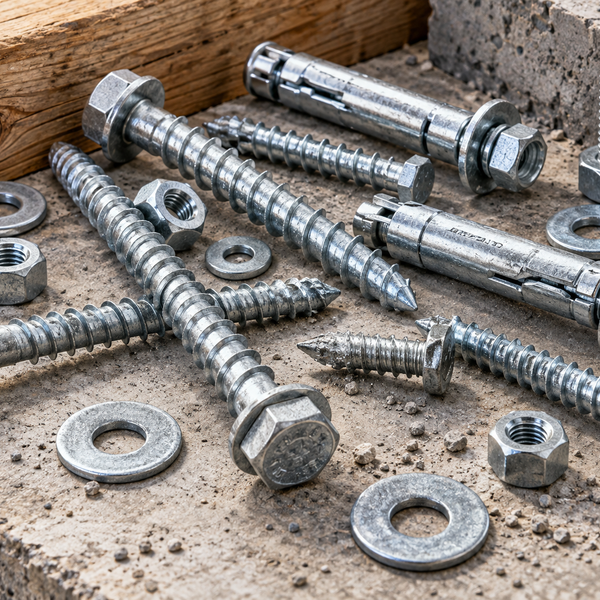
The URFP (Universal Retrofit Foundation Plate) pairs with a ½" Titen HD concrete screw anchor to bolt the wood mudsill directly to the concrete foundation. This is the critical connection that keeps the entire house from sliding off its foundation.
How it works
A hole is drilled through the mudsill and into the concrete. The Titen HD anchor bolt is driven into the concrete, and the URFP plate is fastened over it, clamping the sill plate firmly to the foundation. The plate's wide bearing area distributes the load across the wood grain to prevent splitting.
SDS Screws
SDS Structural Connector Screws
High-strength fastener for all connector hardware
SDS screws are hardened structural wood screws used to fasten all Simpson connector hardware — including L-90 clips and holdowns — to framing members. Their self-drilling tip and coarse thread pattern develop full load values in Douglas fir and similar framing lumber without pre-drilling.
How it works
The screw's case-hardened shank resists shear forces across the wood-to-metal interface. Because they are rated for both shear and withdrawal, a single SDS screw can replace multiple common nails while taking up far less space in tight framing conditions like cripple walls.
Ready to protect your home?
Our team installs every piece of hardware to manufacturer specs and local permit requirements — so your retrofit is built to last.